
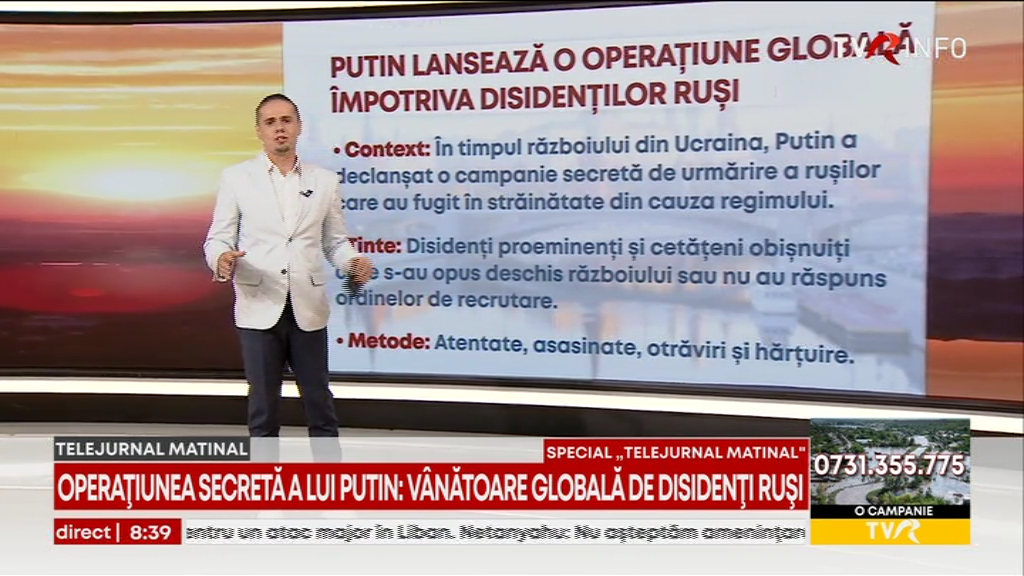

Putin’s Shadowy Hunt: How Russia Targets Dissidents Worldwide
The war in Ukraine is not the only battleground where Vladimir Putin is fighting. A covert operation is unfolding on a global scale, targeting Russian citizens who have fled their homeland, dissenting against the Kremlin’s regime. The international community is witnessing a chilling new chapter in Putin’s playbook: the systematic pursuit and silencing of Russian dissenters.
The exodus of Russians following the invasion of Ukraine, estimated at over a million, has sparked a wave of targeted actions, including threats, intimidation, and even assassination attempts. These activities extend far beyond the borders of Russia, demonstrating the regime’s relentless determination to quell opposition both within and outside its territory.
A Global Network of Fear: From Europe to Central Asia
The Kremlin’s reach extends across continents, with countries like Germany, Czech Republic, Spain, and the United Kingdom becoming hotspots for this campaign. The UK, in particular, has become a target for Russian espionage, with agents monitoring dissident gatherings and infiltrating opposition groups. This covert campaign is not confined to Western Europe. Reports from Central Asia, specifically Kazakhstan and Kyrgyzstan, reveal a chilling collaboration between local authorities and Russia to apprehend individuals who have failed to comply with military recruitment orders.
Fearful Silence: The Tactics of Repression
The Kremlin’s tactics are diverse and often brutal. Assassination attempts, such as the case of Maxim Kuzminov, a Russian deserter found shot dead in Spain, showcase the lengths to which Putin’s regime is willing to go. Intimidation and surveillance are also widely employed, with dissidents facing threats and surveillance both online and offline. This atmosphere of fear creates a chilling effect, silencing voices of dissent and discouraging others from speaking out.
The Role of Technology: Facial Recognition and Digital Surveillance
In its pursuit of dissenters, the Kremlin is utilizing advanced technology. Facial recognition systems are being employed by police in Kazakhstan and Kyrgyzstan to identify and apprehend individuals targeted by the regime. This highlights the chilling synergy between technological capabilities and political repression. The ability to monitor and track individuals across borders has transformed the landscape of political persecution.
Complicit Silence: The Role of Host Countries
A worrying aspect of this global crackdown is the role of host countries. While some are actively working to protect Russian dissidents, others are either reluctant to intervene or have been accused of tacit collaboration with the Kremlin. This complicity allows the regime to operate with impunity, leaving victims vulnerable and unprotected.
A War on Dissent: The Stakes and the Consequences
The Kremlin’s campaign against dissent is a clear indicator of the depth of the regime’s fear of its own people. It demonstrates a willingness to use violence, intimidation, and technological surveillance to suppress any form of opposition. The consequences of this campaign extend beyond the immediate victims, creating a climate of fear and self-censorship that stifles free speech and democratic values.
Beyond Ukraine: A Global Challenge
While the war in Ukraine has dominated global headlines, the Kremlin’s campaign against dissent is a separate but equally important challenge. It requires a collective effort from the international community to provide protection to those fleeing persecution, to hold the Kremlin accountable for its actions, and to stand in solidarity with those seeking freedom and democracy. This is not simply a matter of protecting individual rights, but of safeguarding the principles of a democratic world order.
The global campaign against Russian dissent is a stark reminder of the ongoing threat posed by authoritarian regimes. It necessitates a response that extends beyond condemnation and sanctions, to include proactive measures to protect victims, uphold democratic principles, and challenge the spread of authoritarianism. The future of a free and open world depends on it.
**TAGS:** Putin, Rusia, dizidenti, represiune, exil, supraveghere, atacuri, libertate, democratie, autoritarism, Ucraina, Kremlin, politica, internațional, dreptul omului, tehnologie, Rusia
